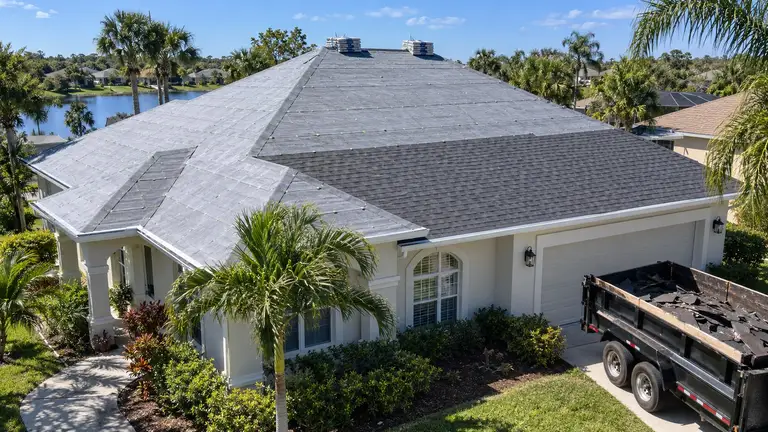
Roof Replacement in Ocala, FL
Tear-off to final inspection: a new roof system built to the current Florida Building Code, not just new shingles over old problems.
Most roof replacement calls in Marion County do not start with a leak. They start with a letter from the insurance company. Florida carriers have spent the last several years pushing back on older shingle roofs, and a homeowner who has never had a drop of water come through the ceiling is suddenly told the roof has to be replaced or the policy will not renew. The second most common start is a real estate deal: a buyer's inspector calls the roof end-of-life and the sale stalls until somebody agrees to fix it. If that is where you are, we can replace the roof now and settle at closing — see a new roof before closing, or the agent version at roofing for realtors.
Either way, a replacement in Ocala is not "new shingles." Under the current Florida Building Code it is a new roof system: everything comes off down to the deck, the deck is inspected and re-nailed, the underlayment goes on as a sealed secondary water barrier, and the covering is fastened to the high-wind pattern the code requires for this county. It is permitted, it is inspected by the county, and when it is done you have paperwork an insurer will accept.
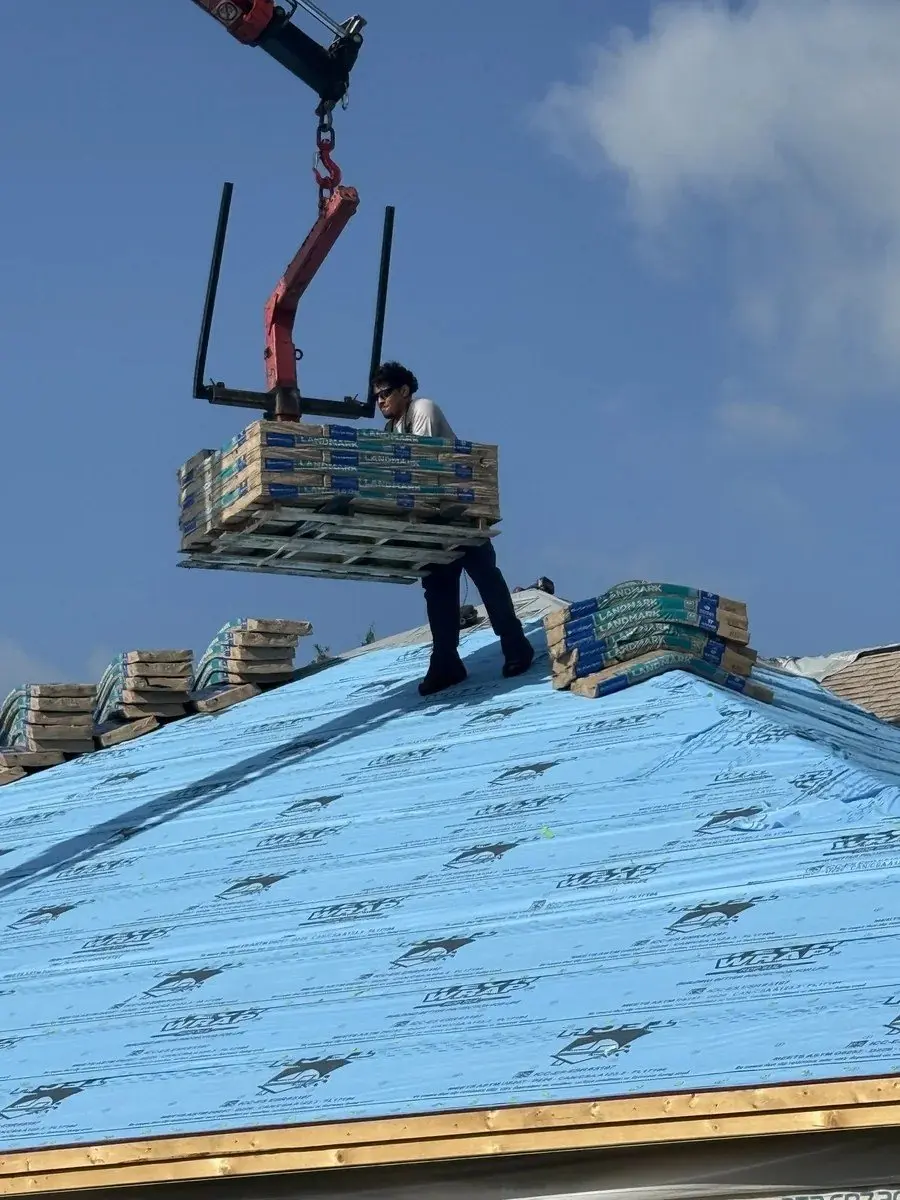
How a replacement actually goes
Roughly in order. The permit and the deck inspection are the two places where a cheap roof and a correct roof part ways, so we are specific about them.
- Inspection and a written scope We get on the roof and in the attic. Deck condition, existing layers, ventilation, flashing, penetrations and any rot get written down before a price is put to anything. If there is plank decking or a second layer of shingle under there, you find out now, not on tear-off day.
- Permit Every re-roof in Florida is permitted work. Unincorporated Marion County goes through Marion County Building Safety; inside city limits it is the City of Ocala's building department. We pull it under our license, which is the only way it should ever be done.
- Tear-off to the deck Old covering, old underlayment, old flashing, all of it. Florida code does not allow a new shingle roof over an existing one, and a roof-over hides the very deck problems a replacement is supposed to fix.
- Deck repair and re-nailing Rotted or delaminated sheathing gets replaced. The rest gets re-nailed to the current code pattern with ring-shank nails, because the original staples or smooth nails from decades ago are not what holds a roof on in a hurricane.
- Dry-in and secondary water barrier Underlayment goes on as a sealed system, self-adhered or taped-seam, so that if the covering is lost in a storm the deck still sheds water. This is the "secondary water resistance" line on a wind mitigation form, and it is worth real money on your premium.
- In-progress inspection The county inspector typically looks at the dry-in before the covering goes on. Nothing gets covered up until they have signed it.
- Flashing, drip edge, ventilation New metal at every edge, valley, wall and penetration. Ridge and intake ventilation get sized to the attic, because a hot, unvented Florida attic cooks shingles from underneath.
- Covering, fastened to the wind zone Shingles at the high-wind nailing pattern, or metal panels at the clip and fastener spacing the manufacturer's Florida product approval calls for. Every product used on a Florida roof has to carry a Florida Product Approval or Miami-Dade NOA.
- Final inspection and cleanup County final, magnet sweep of the yard and driveway for nails, and a copy of the closed permit for your insurance file.
What actually moves the price
We do not publish per-square pricing, because anyone who does is quoting a roof they have not stood on. These are the things we are looking at during the inspection, roughly in the order they matter.
Steep roofs need staging and take longer per square. Every valley and every dormer is more flashing and more waste.
You cannot see this until the old roof is off, which is why a written scope says how deck replacement is priced per sheet before we start.
Metal costs more up front and generally lasts far longer in Florida. Whether that trade is worth it depends on how long you are keeping the house.
Every extra layer is more labor and more disposal weight.
Solar panels in particular have to be removed and reset by a licensed solar contractor, which is a separate cost.
The Villages and the 55+ communities add gate scheduling and cleanup standards that take real time.
The 25% rule, and why it changed
For years, Florida's "25% rule" meant that if more than a quarter of a roof was repaired or replaced within a twelve-month period, the whole roof had to be brought up to current code, which in practice meant a full replacement. After a storm that turned a lot of repairable roofs into forced replacements, and it was one of the things driving insurance claims.
Senate Bill 4-D in 2022 amended section 553.844 of the Florida Statutes so that the 25% rule no longer forces a full replacement on a roof that was built or replaced under the 2007 Florida Building Code or later. The 2007 code took effect in March 2009, so as a practical matter: if your roof was permitted from 2009 onward, a large repair can stay a repair. If your roof predates that, the 25% rule still applies and a big storm repair can still tip into a replacement. We check the permit history on your address before we advise you either way.
What Florida insurers are actually looking at
Since SB 4-D, Florida law (s. 627.7011(5)) says an insurer cannot refuse to write or renew a homeowner's policy solely because of roof age if the roof is less than fifteen years old. For a roof fifteen years or older, the homeowner can get an inspection showing the roof has five or more years of useful life left, and the carrier cannot refuse solely on age. That is the law. In practice, carriers still price older shingle roofs hard, and many treat a shingle roof in the fifteen-to-twenty year range as near the end of its insurable life regardless of what the manufacturer's warranty said.
A replacement resets that clock. It also resets your wind mitigation form: a new roof in Marion County gets you the current-code covering credit, the re-nailed deck credit, the secondary water resistance credit, and, if you choose a hip design or add strapping, potentially more. Under s. 627.0629 carriers are required to offer discounts for those features. Ask us for the wind mitigation inspection after the final; the premium change is often a meaningful part of the math on a new roof.
What a replacement from us includes
- ✓Permit pulled under our license, county inspections scheduled and met
- ✓Full tear-off to the deck and disposal of the old roof
- ✓Deck inspection and re-nailing to current code
- ✓Sealed underlayment / secondary water barrier
- ✓New drip edge, valley metal, pipe boots and step flashing
- ✓Ridge and intake ventilation sized to the attic
- ✓Covering with Florida Product Approval, fastened to the high-wind pattern
- ✓Magnet sweep and cleanup, closed permit for your insurance file
- ✕Deck sheathing replacement beyond what is visible at inspection (priced per sheet, agreed up front)
- ✕Solar panel removal and reinstallation (licensed solar contractor)
- ✕Chimney masonry, stucco or fascia carpentry repairs
- ✕Gutter replacement (we do it, but it is its own line)
- ✕Interior drywall or ceiling repair from past leaks
- ✕Tree trimming needed to get equipment or people onto the roof
If your scope from another contractor does not say who pulls the permit, ask. Homeowner-pulled permits on a re-roof are a warning sign, not a savings.
Usually goes with
Related roofing services
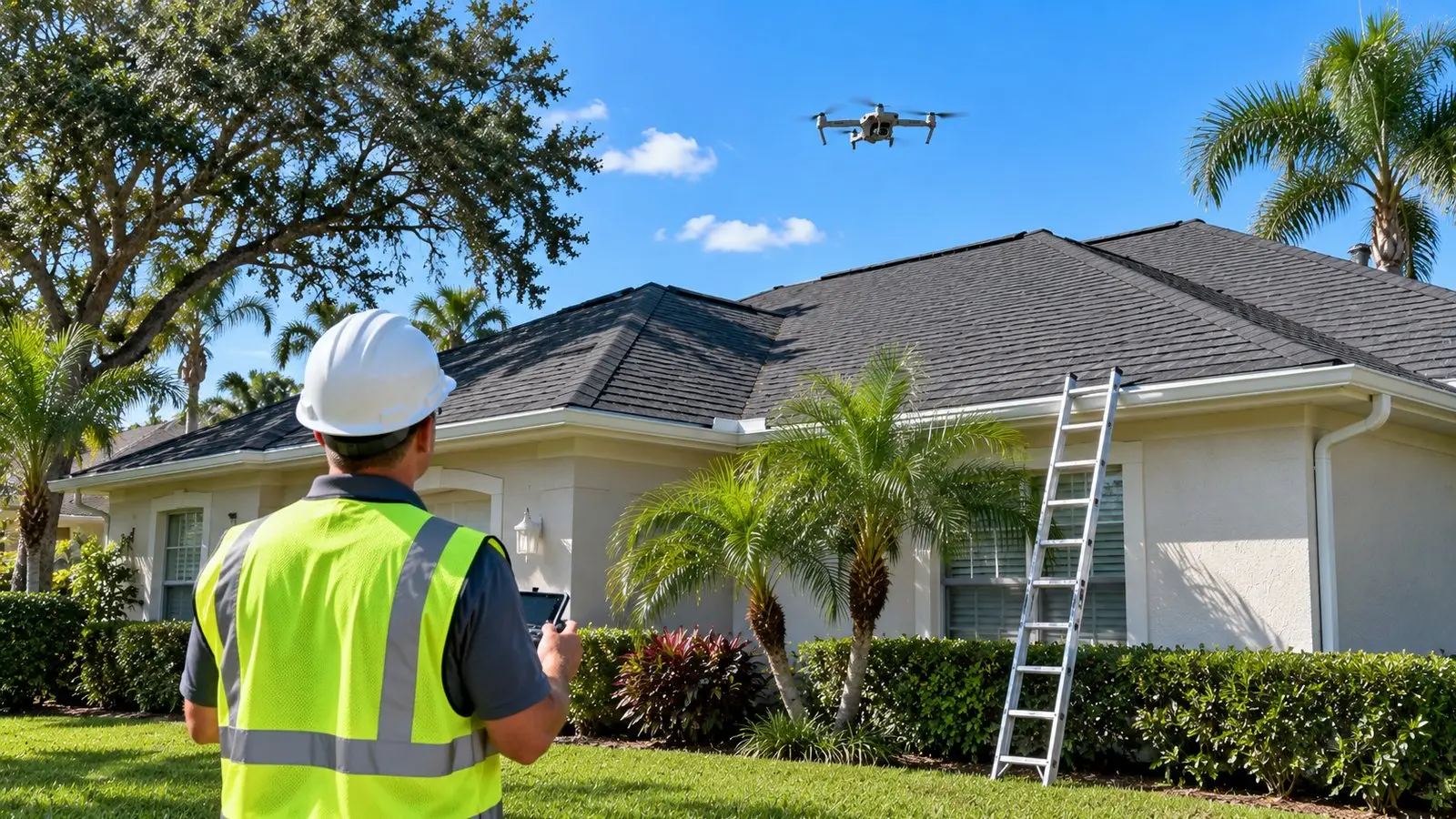
Roof Inspections
Written roof condition reports for buyers, sellers and insurance renewals, and straight answers about 4-point and wind mitigation inspections.
Roof inspections in Ocala →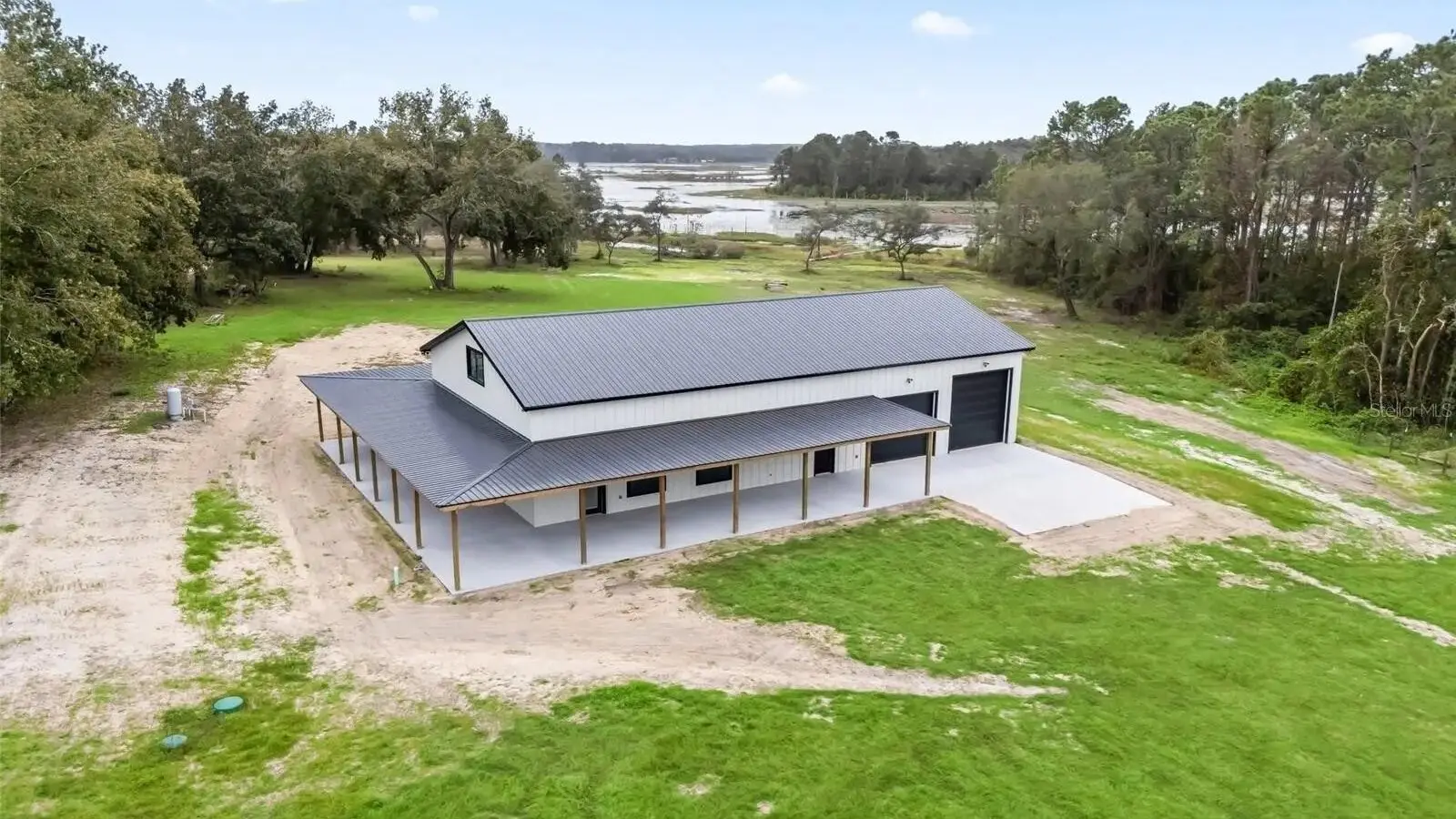
Metal Roofing
Standing seam and exposed-fastener panel systems for homes, barns and shops. The longest-lived roof you can put on a Florida house.
Metal roofing in Ocala →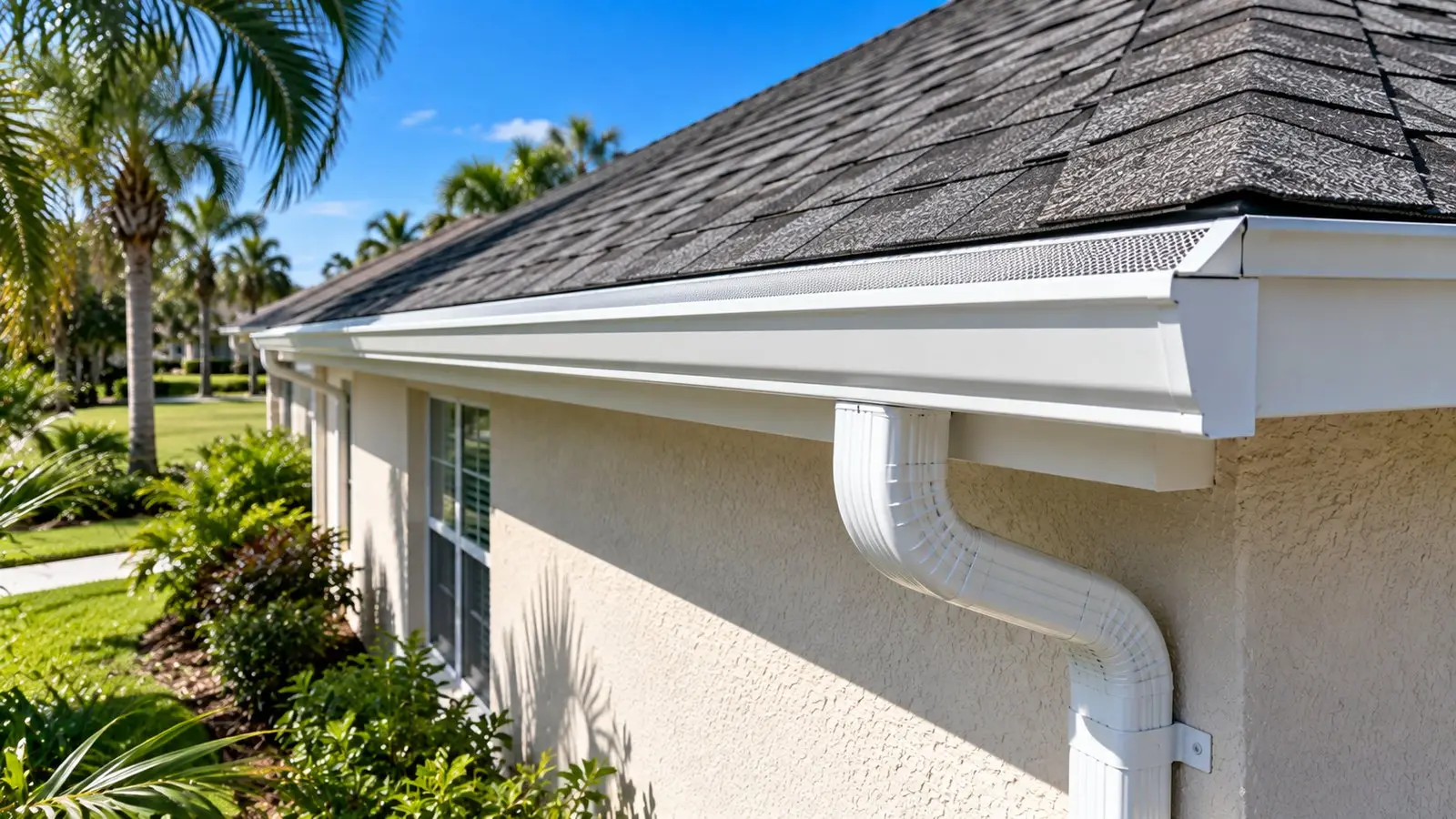
Gutters
Seamless aluminum gutters and downspouts, sized for Florida rain and installed so the water actually leaves the house.
Gutter installation in Ocala →Questions we get asked
Roof Replacement questions
How do I know if my roof needs replacing or just repairing?
Do I need a permit to replace my roof in Marion County?
Can you put new shingles over my old ones?
Will a new roof lower my insurance premium?
What happens if you find rotten decking?
Do you handle the HOA or ARC approval?
Where we work
Roof replacement across Marion County
Free estimates
Get your estimate today
Tell us where the house is and what the roof is doing. We'll call you back and come look at it with you — free, and no obligation either way.