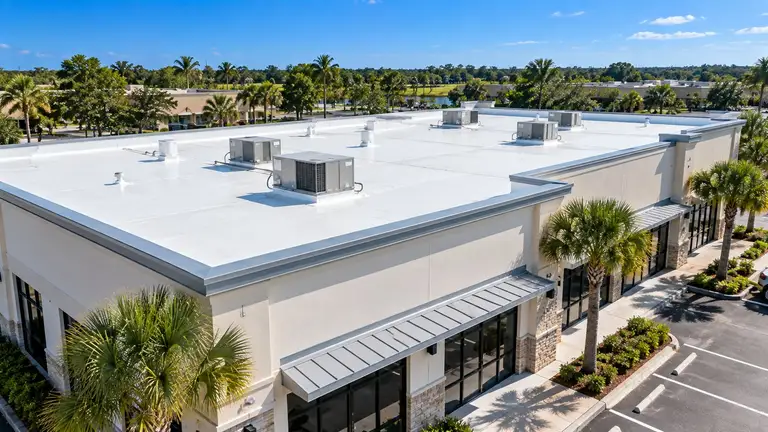
Commercial Roofing in Ocala, FL
Low-slope and metal roof systems for shops, offices, churches, barns and warehouses across Marion County.
Commercial roofing in Marion County is mostly low-slope: the flat-looking roofs on strip retail, offices, churches, warehouses, auto shops and self-storage along SR-200, Pine Avenue, Silver Springs Boulevard and the industrial areas off US-27 and SW 44th. Low-slope roofs do not shed water the way a pitched roof does; they have to be waterproof, not just water-shedding, and that is a different set of materials and details.
We install and repair single-ply membrane (TPO), modified bitumen and metal roof systems for commercial and agricultural buildings across Ocala and Marion County, and we handle the flat-roof repair calls that most residential roofers turn down: ponding, seam failures, failed pitch pockets at rooftop equipment, and drains that have not been cleared since the building went up.
TPO single-ply
Heat-welded thermoplastic membrane
Modified bitumen
Asphalt-based rolled roofing, torch, cold-applied or self-adhered
Which one you want: TPO on a large, open, lightly-trafficked roof. Modified bitumen on a small, cut-up roof with a lot of equipment. On either, the drains, the flashings and the terminations are where the money is spent well or badly.
Commercial work we take on
- ✓Low-slope re-roofs and recovers: TPO, modified bitumen
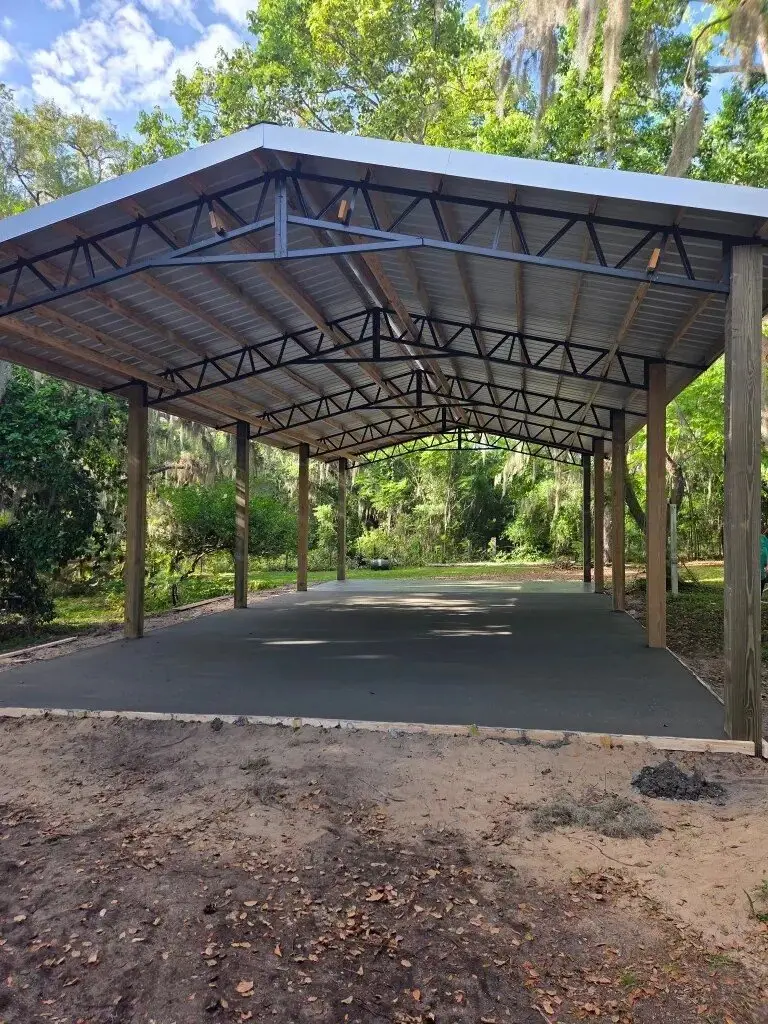
- ✓Metal roof systems for shops, warehouses, barns and agricultural buildings
- ✓Flat roof leak repair: seams, flashings, pitch pockets, drains, scuppers
- ✓Roof coatings (silicone / acrylic) on sound roofs to extend life and reflectivity
- ✓Rooftop equipment curbs and penetrations coordinated with your HVAC contractor
- ✓Gutter and downspout systems sized for large roof areas
- ✓Written condition reports for property purchases and lease turnover
- ✕Very large or multi-building projects (we will tell you honestly whether the scale fits us)
- ✕Structural steel or deck replacement beyond roofing scope (engineer and GC involved)
- ✕Spray foam roofing
- ✕Roofs with active tenants where the work cannot be phased around them
Permits, code and insurance on commercial roofs
Commercial re-roofs in Marion County are permitted through the same county or city building department as residential, but the code path is the Florida Building Code, Building and Existing Building volumes rather than the Residential volume. Wind uplift design for a low-slope roof is calculated for the building's height, exposure and edge zones, and the membrane or panel system's Florida Product Approval has to match. Roof edge metal (fascia, coping) is its own tested assembly under the current code.
Commercial property carriers are going through the same roof-age scrutiny as residential ones. A roof condition report and a maintenance record make renewals easier, and a documented recover or coating on a sound roof can extend the insurable life of the building without the cost of a full tear-off. We will tell you which of those your roof actually qualifies for.
Usually goes with
Related roofing services
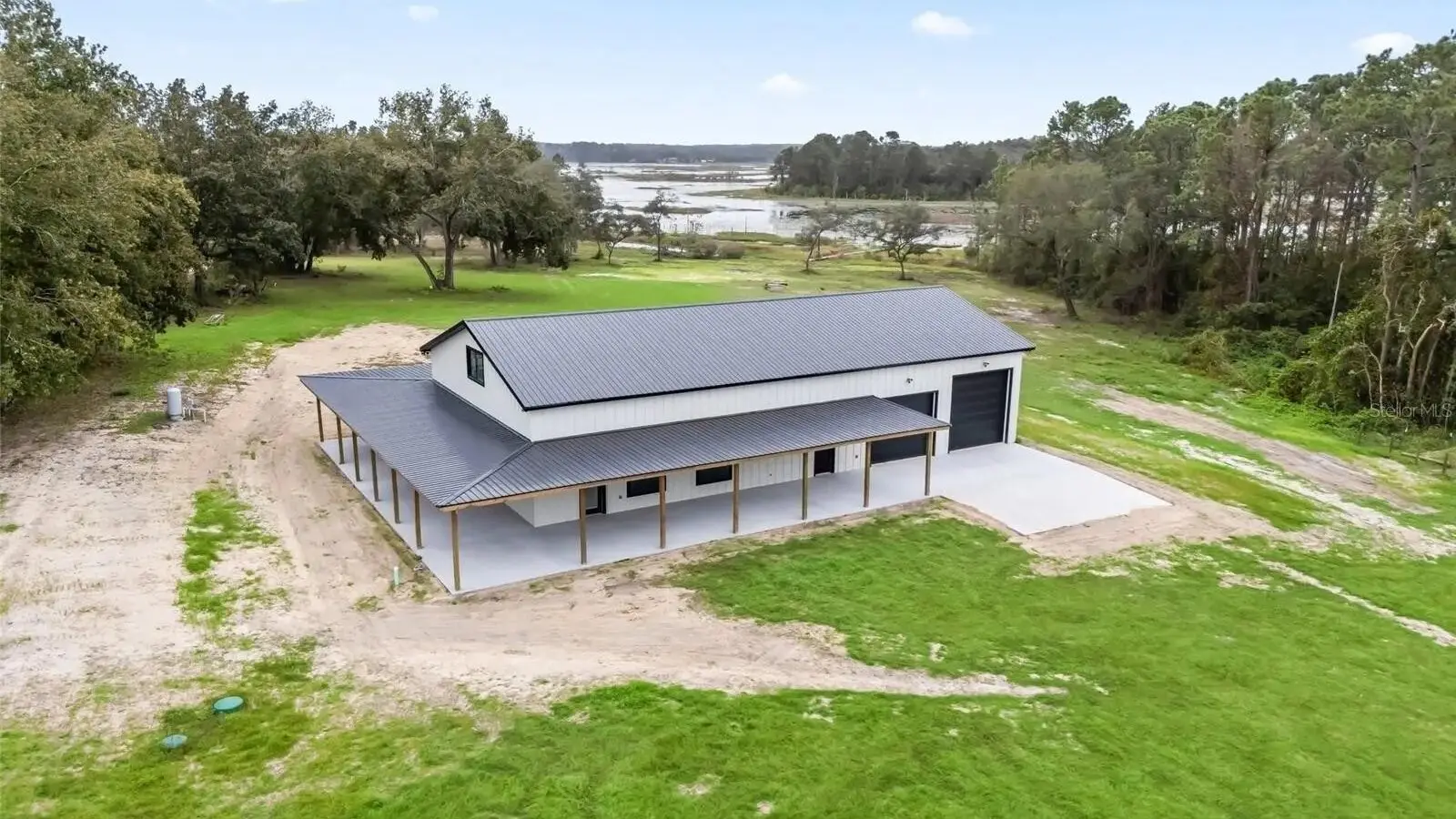
Metal Roofing
Standing seam and exposed-fastener panel systems for homes, barns and shops. The longest-lived roof you can put on a Florida house.
Metal roofing in Ocala →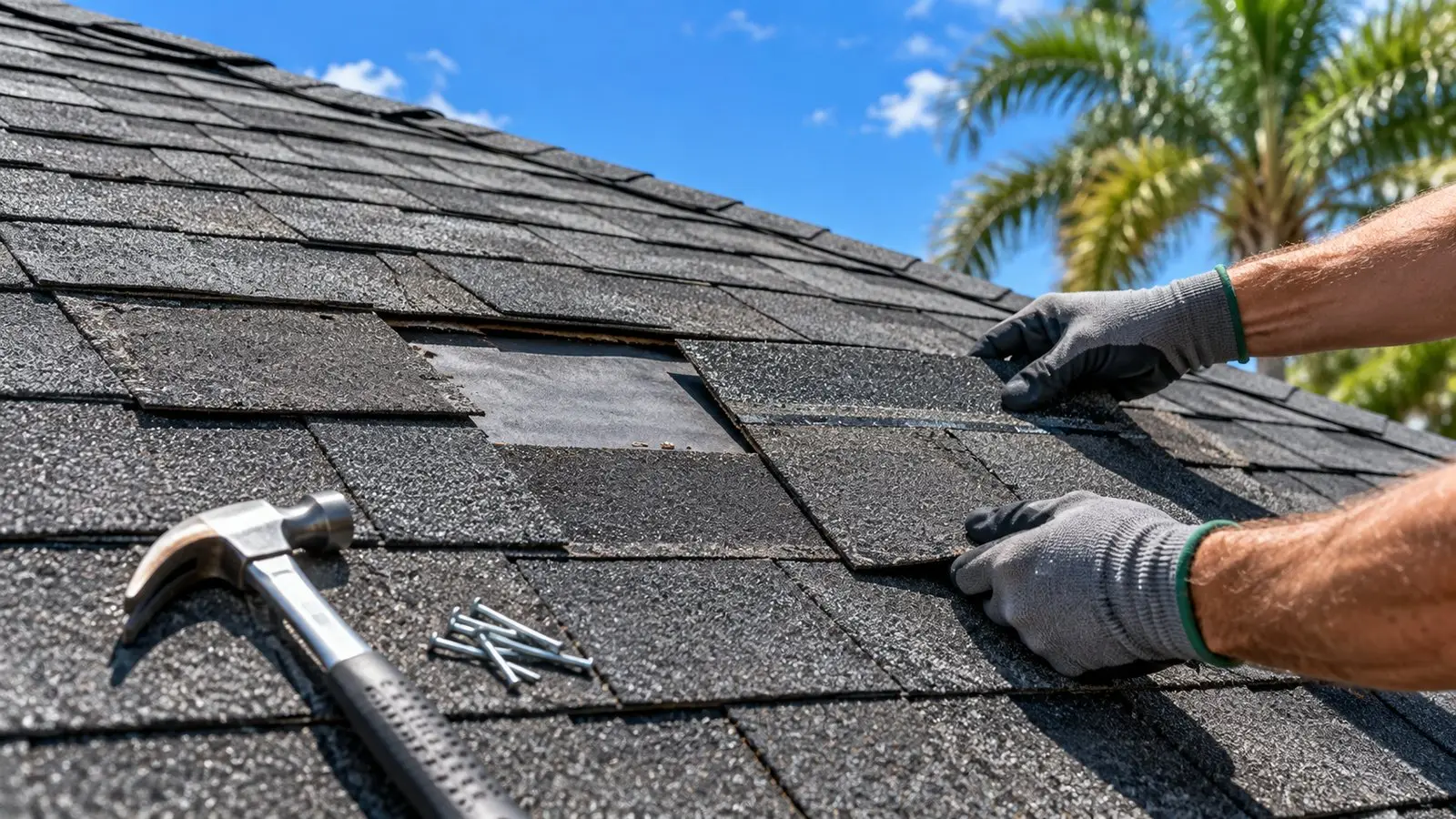
Roof Repair
Leaks found and fixed at the source. If a repair is the right answer we will say so; if it is throwing money at a roof that is done, we will say that too.
Roof repair in Ocala →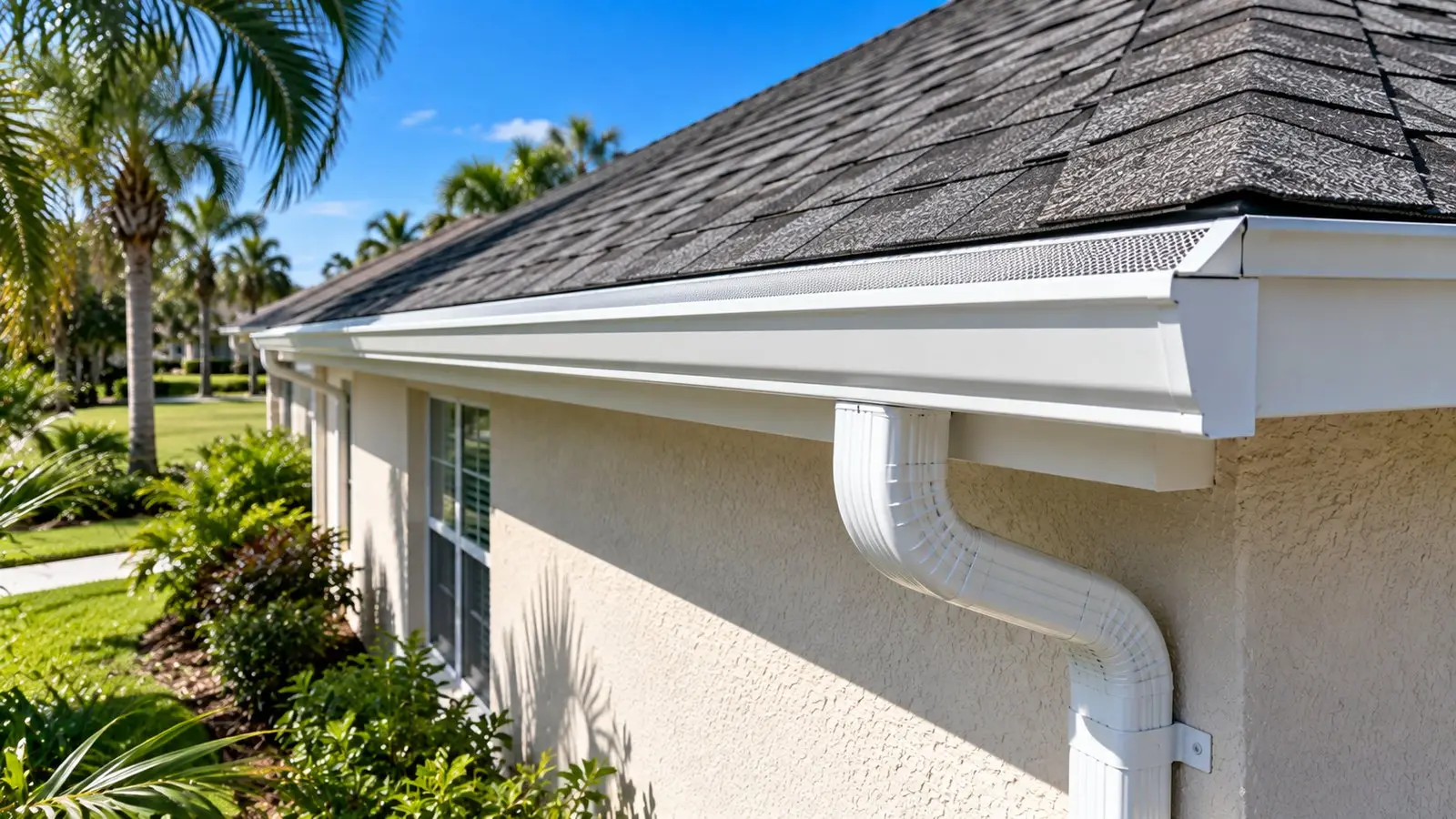
Gutters
Seamless aluminum gutters and downspouts, sized for Florida rain and installed so the water actually leaves the house.
Gutter installation in Ocala →Questions we get asked
Commercial Roofing questions
My flat roof ponds water. Is that a problem?
Can you coat my roof instead of replacing it?
Do you work around my business hours?
Do you roof barns and agricultural buildings?
Where we work
Commercial roofing across Marion County
Free estimates
Get your estimate today
Tell us where the house is and what the roof is doing. We'll call you back and come look at it with you — free, and no obligation either way.